

There’s a $10 million program designed to help NYC fleet operators go electric — and in our conversations with hundreds of operators across the city, most have never heard of it.
It’s not buried in fine print. It’s not limited to massive corporations. It was built specifically for small commercial fleets: the 5-to-50-vehicle operators running shuttles, paratransit, ambulettes, and passenger vans across NYC’s boroughs every day.
It’s called the Clean Transit Access Program (CTAP). And if you operate a commercial fleet in the New York City metro area, it’s worth five minutes to understand what’s on the table.
What Is CTAP?
CTAP is funded by NYSERDA — the New York State Energy Research and Development Authority — with $10 million earmarked to transition commercial fleets to electric vehicles.
The program exists because New York State has aggressive clean transportation goals, and the state knows those goals won’t be met without getting small and mid-size operators on board. The big carriers have their own EV programs. The operators running 8 vans out of Brooklyn? Until now, nobody was building a program for them.
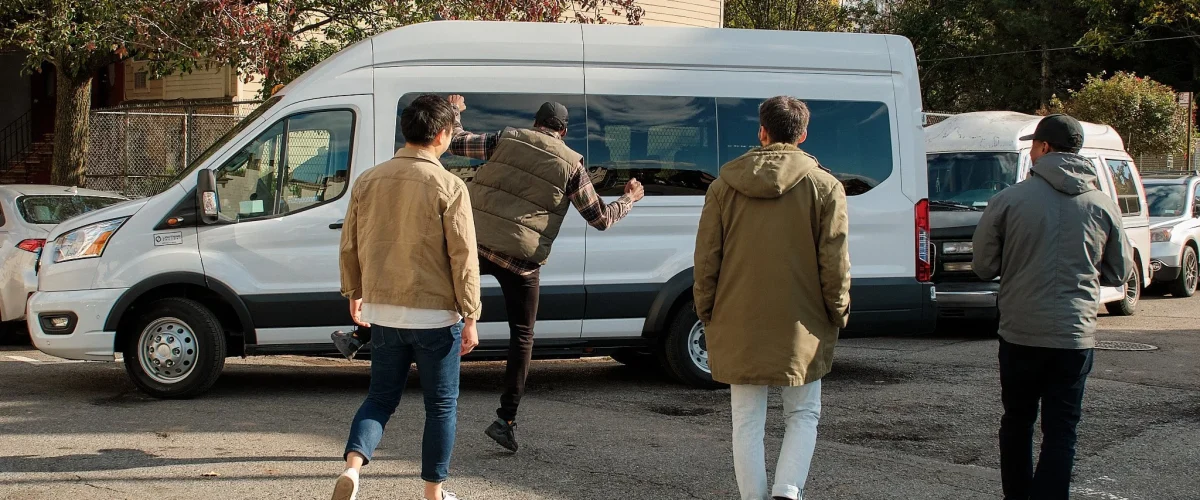
What Operators Actually Get
This isn’t a rebate you apply for and wait six months to receive. CTAP is a fully structured program that bundles everything an operator needs to start running electric vehicles:
- Electric vehicles — Ford E-Transit 350s, including ADA-accessible configurations
- Charging access from Day 1 — Network charging available immediately, with depot-based infrastructure developed over time
- Financing that doesn’t require massive upfront capital — Government-backed, designed for operators that traditional banks won’t touch
- Fleet management software — Tools to run and monitor your electric fleet
- Maintenance support — Help keeping your EVs on the road
- Driver training — Your team gets trained on EV operations, not left to figure it out
The key word is bundled. You’re not piecing together a vehicle from one vendor, a charger from another, and financing from a third. It’s one program. One partner. One predictable monthly cost.
Who Qualifies?
CTAP was designed for a specific operator profile:
- Fleet size: 5–50 commercial vehicles
- Vehicle types: Shuttles, paratransit, ambulettes, passenger vans, for-hire vehicles
- Location: NYC metro area operations
- Readiness: You don’t need to replace your entire fleet — even adding a few EVs qualifies
If you’re a small commercial fleet operator in New York City, this program was built with you in mind.
The Economics: What the Numbers Actually Look Like
The financial case for fleet electrification has gotten hard to argue with:
Fuel savings: Operators switching from gas to electric are saving up to $16,000 per vehicle per year in fuel costs. A gas van running NYC routes burns through $16,000–$22,000 annually. The same routes on electric cost roughly $1,800–$2,400 in electricity — especially with overnight charging at lower rates.
Maintenance savings: EVs have fewer moving parts. No oil changes. Regenerative braking means less brake wear. Industry data shows EVs cost about 40% less to maintain than gas vehicles over their lifetime.
Predictability: Gas prices swing. Electricity rates don’t — at least not at the same scale. Operators who switch report that the single biggest change isn’t even the savings. It’s knowing what next month’s costs look like.
Environmental impact: Each commercial shuttle that goes electric eliminates roughly 52 metric tons of CO2 per year. That matters for the communities these fleets serve — and increasingly, it matters for contract eligibility.
Why Most Operators Haven't Heard About This
Government programs aren’t known for great marketing. CTAP doesn’t have a Super Bowl ad. It doesn’t show up in your Instagram feed.
Most operators hear about it one of three ways: word of mouth from another operator, a cold call from someone in the industry, or an article like this one.
The program also runs counter to what most small fleet operators have experienced with “government programs” in the past — long applications, unclear timelines, and benefits that never quite materialize. CTAP is structured differently. It’s administered by Dollaride, a Brooklyn-based clean-mobility company that works directly with operators, not through layers of bureaucracy.
The process is straightforward:
- Discovery call — A conversation about your fleet, your routes, and your goals
- Solution design — A customized plan for your operation (vehicle count, charging setup, financing terms)
- Onboarding — Vehicle delivery, charging access, and driver training
- Operations — You run your fleet. The EV complexity is handled.
The Window Is Open — But It Won't Be Forever
Government funding programs have budgets. When the funding is allocated, it’s allocated. CTAP’s $10 million is significant, but it’s not unlimited, and operators who move first have the most flexibility in structuring their deals.
This isn’t a scare tactic. It’s just how funding programs work. The operators who’ve already started the conversation are the ones with the most options. We wrote about this on our Substack if you want to learn more.
Find Out If Your Fleet Qualifies
If you operate a commercial fleet in the NYC metro area and you’ve been thinking about electric — or if you haven’t been thinking about it but the math above caught your attention — the next step takes about 30 seconds.
No commitment. No sales pitch on the first call. Just a conversation about whether CTAP is the right fit for your fleet.
Questions? Email us at team@dollaride.com — we read every one.
Dollaride is a Brooklyn-based clean-mobility company and certified Minority Business Enterprise (MBE). We administer CTAP on behalf of NYSERDA and provide turnkey EV-as-a-Service for small commercial fleets across NYC.
Prepared by Dollaride with Claude.