
For years, the EV incentive landscape has had a clear target: fleet operators. The organizations that own the vehicles, employ the drivers, and burn the fuel. If you weren’t operating a fleet directly, the funding wasn’t designed for you.
That’s shifting. And if you’re a transportation broker or network company, the shift matters more than you think.
New programs — including NYSERDA-backed initiatives launching in New York City — are being built specifically for the organizations that allocate rides, not just the ones that drive them. The goal is straightforward: get more clean vehicles into service by working with the companies that control ride volume.
Here are five things every broker should understand about what’s happening — and what it means for your business.
1.
EV incentives are no longer just for fleet operators. Brokers now have a seat at the table.
Most EV funding programs were designed around a simple model: help someone buy or lease an electric vehicle. That works when the buyer and the operator are the same entity.
But in transportation sectors like NEMT, paratransit, and for-hire services, that’s often not how the industry works. Brokers manage contracts. They allocate rides across networks of drivers and operators. They don’t own the vehicles — but they determine where millions of rides go every year.
Program designers are catching up to this reality. Newer incentive structures recognize that the fastest way to put clean vehicles into service at scale isn’t just to fund individual operators. It’s to work with the organizations that shape demand across entire networks.
If you allocate rides in New York City, you’re now part of the equation.
2.
"Non-operator" doesn't mean "non-eligible." EVIP was built for companies that allocate rides.
This is the most common misconception we hear from brokers: “We don’t operate vehicles, so EV programs don’t apply to us.”
EVIP — the EV Incentive Program, backed by NYSERDA — was designed precisely for this gap. The program unlocks funding for brokers and network companies that allocate rides to subsidized, transit-style EVs. You don’t procure the vehicles. You don’t install chargers. You don’t become a fleet operator.
Your role is program partner. You allocate rides to clean vehicles that are procured and managed through the program. The funding is tied to ride allocation — the thing you already do every day.
It’s a fundamentally different model from traditional fleet incentives. And it was built this way on purpose.
3.
Clean vehicle mandates are coming for your network — whether you're ready or not.
Regulatory pressure on transportation emissions isn’t slowing down. New York State’s climate targets are aggressive, and the policy tools to enforce them are expanding. Clean vehicle requirements are moving beyond fleet operators and into the contract and procurement layer — the layer where brokers operate.
This doesn’t mean you’ll be fined next quarter. But it does mean that the contracts you bid on in 2027 and 2028 will increasingly include clean vehicle provisions. Healthcare plans, municipal agencies, and large employers are already beginning to ask: what percentage of your network runs clean?
The brokers who can answer that question with real numbers will have a competitive edge. The ones who can’t will be playing catch-up at exactly the wrong time.
4.
The compliance landscape is shifting. Early movers have the advantage.
Representing an EV incentive program to clients and contract partners requires more than good intentions. It requires understanding how the program works, what the funding mechanics look like, and how to document participation for compliance purposes.
This is where early engagement matters. Brokers who enter programs like EVIP during the evaluation phase — before the partner cohort is finalized — get something that late entrants don’t: time.
Time to understand the program structure. Time to align internal operations with program requirements. Time to train staff on how ride allocation connects to incentive eligibility. And time to build a track record that becomes a differentiator when the next RFP lands on your desk.
Government-backed programs have budgets. The organizations that engage early have the most flexibility in how they participate.

5.
You don't need to become a fleet operator to participate. That's what partners like Dollaride are for.
This is the structural point that makes everything else work.
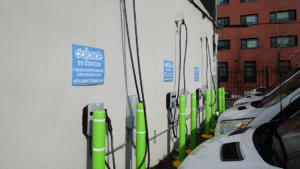
Dollaride handles vehicle procurement, charging infrastructure, and program administration for EVIP. We work directly with NYSERDA. We manage the complexity so that our partners — including broker organizations — can focus on what they do best: allocating rides and managing networks.
Your role as a broker doesn’t change. What changes is that a portion of the rides you allocate now flow to subsidized clean vehicles, and that allocation unlocks funding and program benefits designed for your organization.
We’re currently evaluating partner organizations for the 2026 EVIP cohort in New York City. The program is designed for scale — but we’re starting with a select group of broker and network company partners to build the model right.
Is EVIP a Fit for Your Organization?
If you’re a transportation broker or network company operating in or around New York City, and you allocate rides across a driver or operator network, the next step is a brief conversation about fit.
No commitment. No sales pitch. We’re evaluating partners just as much as you’re evaluating us.