

You can buy an electric van tomorrow. That part’s never been the hard part.
The hard part is what happens the next morning when your driver asks where to charge it. Or next month when you realize there’s nowhere to park it overnight that has a plug. Or six months in when you’re juggling two separate vendors for charging and maintenance while still trying to run your routes.
A vehicle is one piece. An electric fleet operation takes three.
The Full Package
Every working EV fleet operation requires three things:
- Vehicle — the EV itself, configured for your routes and passenger loads
- Charging — reliable access to power, from Day 1 through long-term depot infrastructure
- Parking — a place to store and charge vehicles overnight, close to your operating area
Remove any one and the operation breaks. A van with no charging plan is a liability. A charger with no parking spot is useless. A parking space with no power hookup is just pavement.
Most operators who stall on electrification aren’t stuck on the vehicle. They’re stuck on the other two pieces — and they don’t realize it until they’re already in the process.
The Charging Problem Nobody Warns You About
Here’s what most operators think charging looks like: buy a charger, plug it in, done. Like installing a microwave.
Here’s what it actually looks like:
- Site study — an electrician or engineer evaluates your electrical panel, available amperage, and wiring
- Utility coordination — you call Con Edison. You wait. You file applications. You wait more
- Grid capacity — your building’s electrical system may not support the load. Upgrades can cost five figures
- Permitting — city permits for electrical work, inspections, sign-offs
- Timeline — the whole process can take 6 to 12 months before a single charger is energized
None of this is visible from the outside. And by the time operators discover it, they’ve already committed to vehicles they can’t keep charged.
This is the most common place fleet electrification breaks down. Not because operators don’t want EVs. Because nobody told them what charging actually requires.
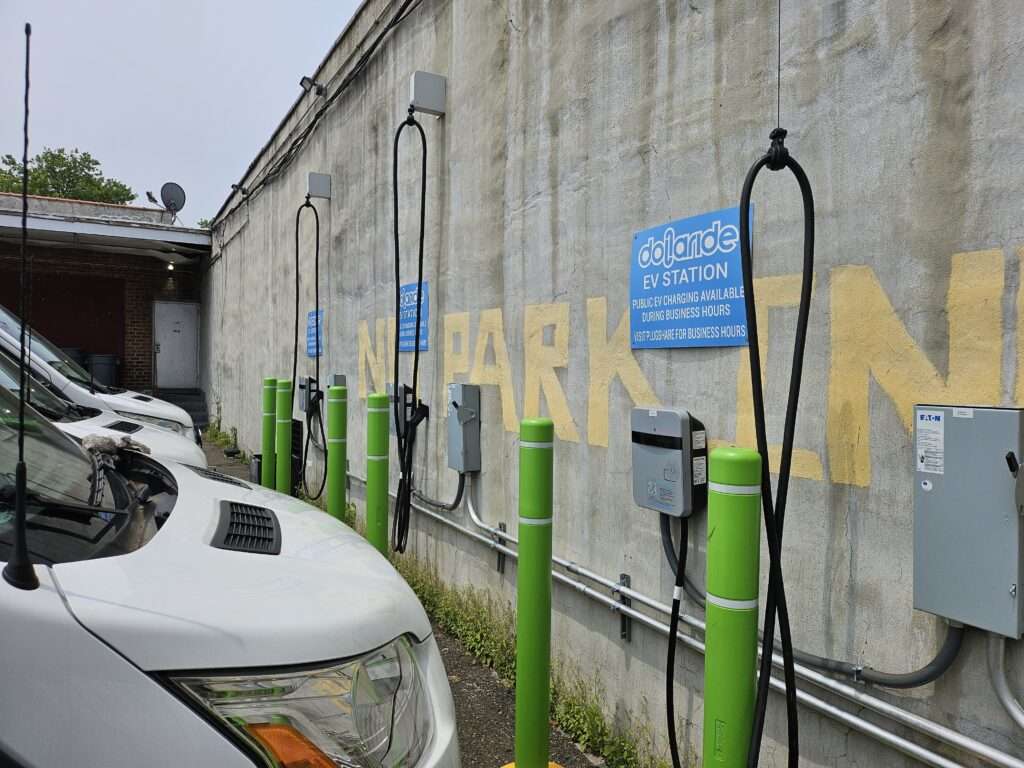
Parking: The Leg Everyone Forgets
Here’s what most operators think charging looks like: buy a charger, plug it in, done. Like installing a microwave.
Here’s what it actually looks like:
- Site study — an electrician or engineer evaluates your electrical panel, available amperage, and wiring
- Utility coordination — you call Con Edison. You wait. You file applications. You wait more
- Grid capacity — your building’s electrical system may not support the load. Upgrades can cost five figures
- Permitting — city permits for electrical work, inspections, sign-offs
- Timeline — the whole process can take 6 to 12 months before a single charger is energized
None of this is visible from the outside. And by the time operators discover it, they’ve already committed to vehicles they can’t keep charged.
This is the most common place fleet electrification breaks down. Not because operators don’t want EVs. Because nobody told them what charging actually requires.
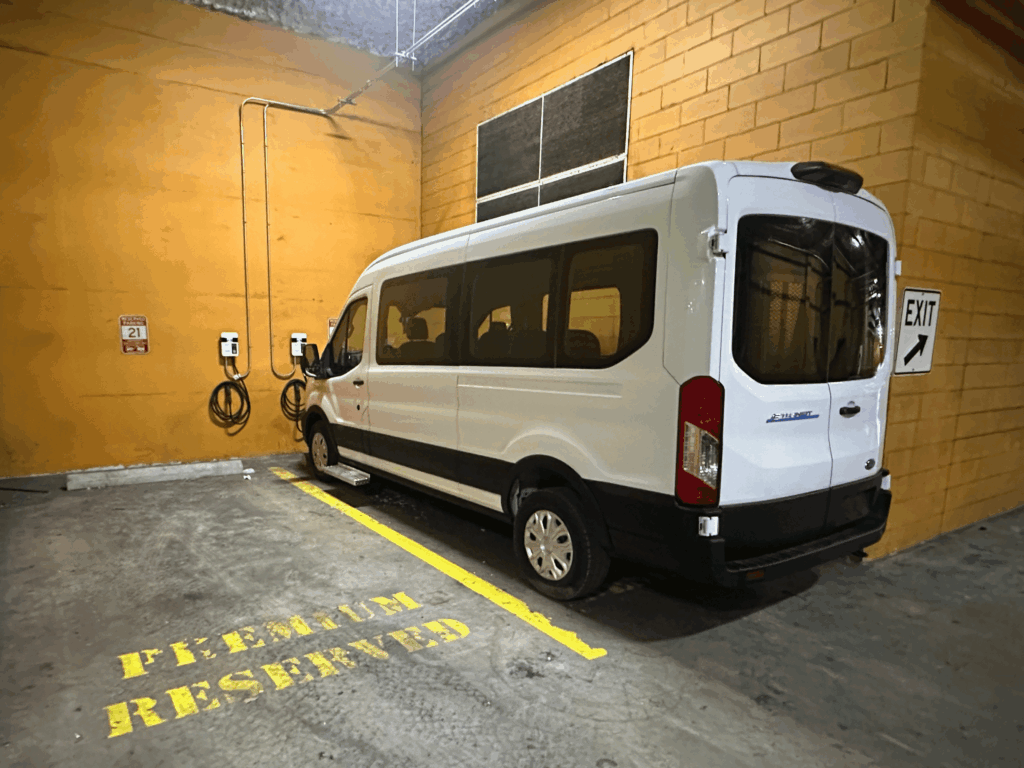
What "Turnkey" Actually Means
The word “turnkey” gets overused. In fleet electrification, it means something specific: you don’t assemble the three pieces yourself. Someone has already built the full package.
Here’s what that looks like through CTAP — the Clean Transit Access Program, backed by $10 million in NYSERDA funding:
Vehicle: You get EVs configured for commercial passenger operations. Not consumer SUVs with fleet wraps. Vehicles built for your routes, your passengers, and your daily mileage.
Charging: You get access to a partner charging network from Day 1 — no waiting 9 months for your own chargers. As your fleet grows, dedicated depot infrastructure gets developed for your operation. You don’t coordinate with Con Edison. You don’t file permits. You don’t become an energy expert.
Parking: Dollaride helps source parking solutions near your operating area with the electrical access your fleet needs. If you already have a depot, we evaluate it for charging readiness. If you don’t, we help find one.
The full package. One partner. One predictable monthly cost.
Why Piecemeal Doesn't Work
Some operators try the build-it-yourself approach. Buy vehicles from a dealer. Contract a charging company. Find parking on their own. It makes sense in theory — you control every piece.
In practice, it creates three problems:
Coordination gaps. Your vehicles arrive in March. Your chargers aren’t permitted until September. For six months, you’re paying for vehicles you can’t fully utilize — or burning revenue hours at public charging stations.
Cost unpredictability. Three vendors means three invoices, three pricing structures, three sets of terms that escalate independently. Your total cost of ownership becomes a moving target.
No single point of accountability. When something breaks — a charger goes down, a parking lease changes, a vehicle needs warranty service — you’re the project manager. Every hour you spend coordinating vendors is an hour you’re not running routes.
The operators who succeed with electrification aren’t the ones who know the most about EVs. They’re the ones who found a partner that handles the complexity so they can focus on their passengers.
The Math With the Full Package
When all three pieces are working together — vehicle, charging, and parking — the economics compound:
- Fuel savings: Up to $16,000 per vehicle per year compared to gas
- Maintenance savings: About 40% less than gas vehicles — fewer moving parts, no oil changes, less brake wear
- Predictable costs: Electricity rates don’t swing like gas prices. You know what next month costs before it starts
- Environmental impact: Each commercial shuttle you electrify eliminates roughly 52 metric tons of CO2 per year
For a 10-van fleet, that’s over $175,000 a year kept in your business instead of burned at the pump and the repair shop.
But those numbers only hold when the full package is in place. A vehicle without reliable charging doesn’t save you $16,000. It costs you downtime. A fleet without stable parking doesn’t reduce maintenance costs. It creates new ones.
The package is what makes the savings real.
See If CTAP Is Right for Your Fleet
CTAP was built for small commercial fleet operators running 5 to 50 vehicles in the NYC metro area — shuttles, paratransit, ambulettes, and passenger vans. If that’s you, the conversation starts with a 15-minute call about your fleet, your routes, and your goals.
No commitment. No complexity. Just a clear picture of what the full package looks like for your operation.

Prepared by Dollaride with Claude.