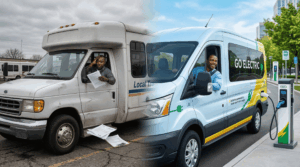
You’ve seen the numbers. Fuel savings of $16,000 per vehicle per year. Lower maintenance costs. Government funding available now. The financial case for going electric is strong.
Then someone asks the question that stalls the whole conversation: “But where do I charge them?”
Fair question. And here’s the honest answer: charging a fleet of commercial vehicles is not like charging your phone. It’s not like charging your personal car, either. It’s more involved than most operators expect — and it’s the number one reason good operators hesitate on the EV transition.
We’re going to break it down. Not the engineering version. The operator version.
What Most Operators Assume (And Why It's Wrong)
Most fleet operators walk into charging thinking it works like buying appliances. Pick a charger online, call an electrician, plug it in, done.
The reality is different. Commercial fleet charging involves site assessments, electrical panel evaluations, utility coordination, potential grid upgrades, and permitting. In New York City, that means working with Con Edison — and anyone who’s done that knows it’s not a weekend project.
Here’s the pattern we see again and again:
- An operator starts optimistic. “I’ll just install some chargers at my depot.”
- They research it. They discover the complexity.
- They freeze. The project stalls — not because the economics don’t work, but because the charging piece feels impossible to figure out alone.
That reaction is completely understandable. But it’s also unnecessary — because you don’t have to figure it out alone.
Two Types of Charging. Two Different Jobs.
If someone tells you “just install a charger,” ask them which kind. Because there are two, and they serve completely different purposes.
Level 2 (L2) Charging — Your Overnight Workhorse
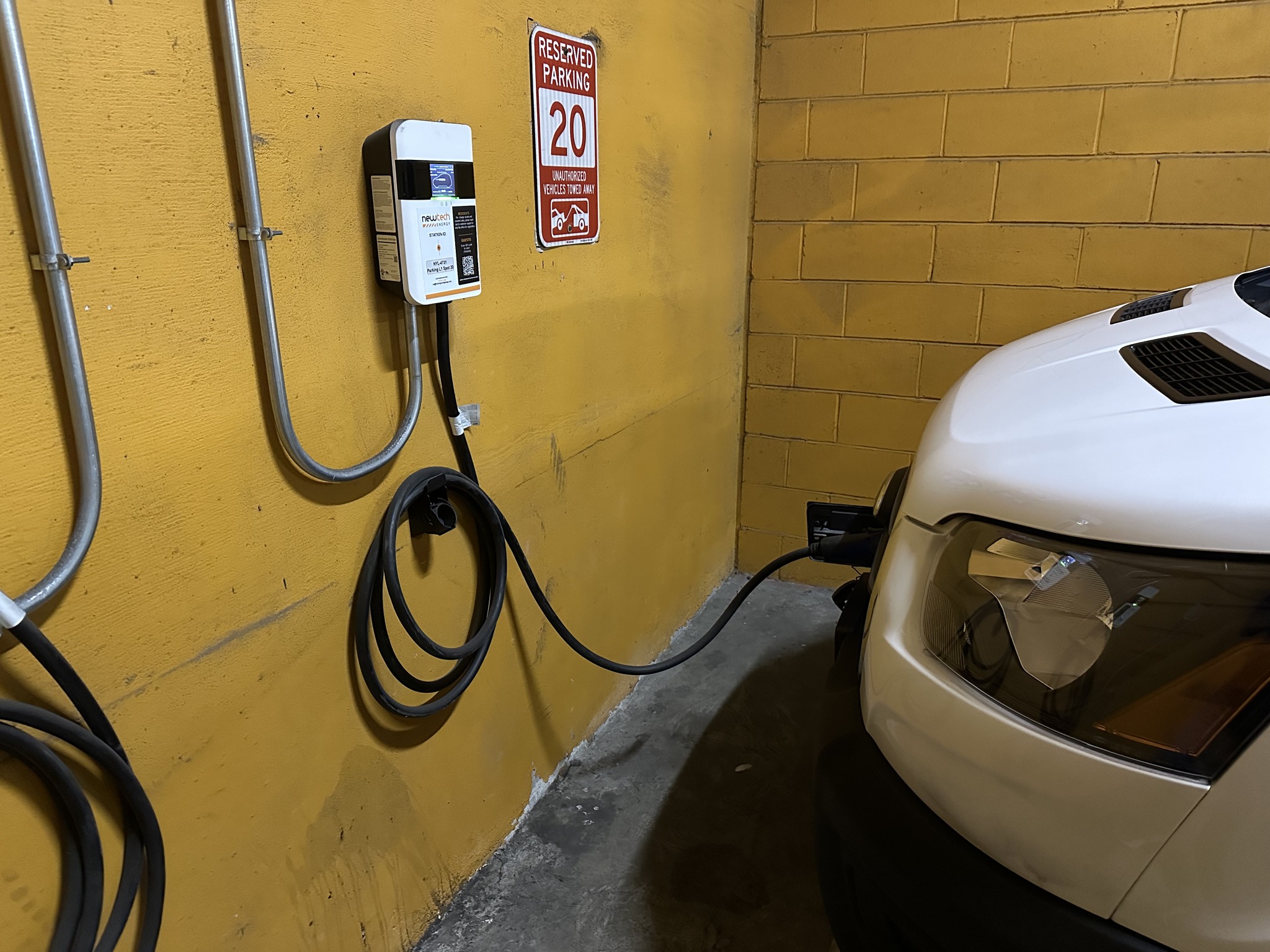
This is a dedicated charger installed at your depot or parking location. Think of it as the equivalent of fueling up at your home base, except instead of gas, it’s electricity — and it happens while you sleep.
L2 chargers take several hours to bring a vehicle to full charge. That sounds slow until you realize your vans sit parked for 8–12 hours every night anyway. Overnight L2 charging turns idle time into fuel time. And because electricity rates are lowest at night, this is the cheapest way to keep your fleet running.
For most fleet operations, overnight L2 at your depot is the primary charging strategy. It’s reliable. It’s affordable. And once it’s installed, it runs on autopilot.
DC Fast Charging (DCFC) — Your Mid-Route Backup
Fast chargers can add significant range in 30–45 minutes. They’re the gas station equivalent — you pull in, top up, and keep moving.
Fast charging costs more per kilowatt-hour than overnight L2. You wouldn’t want to run your entire fleet on it. But for a driver who’s running long routes or needs a mid-day boost, having access to a fast-charging network is essential.
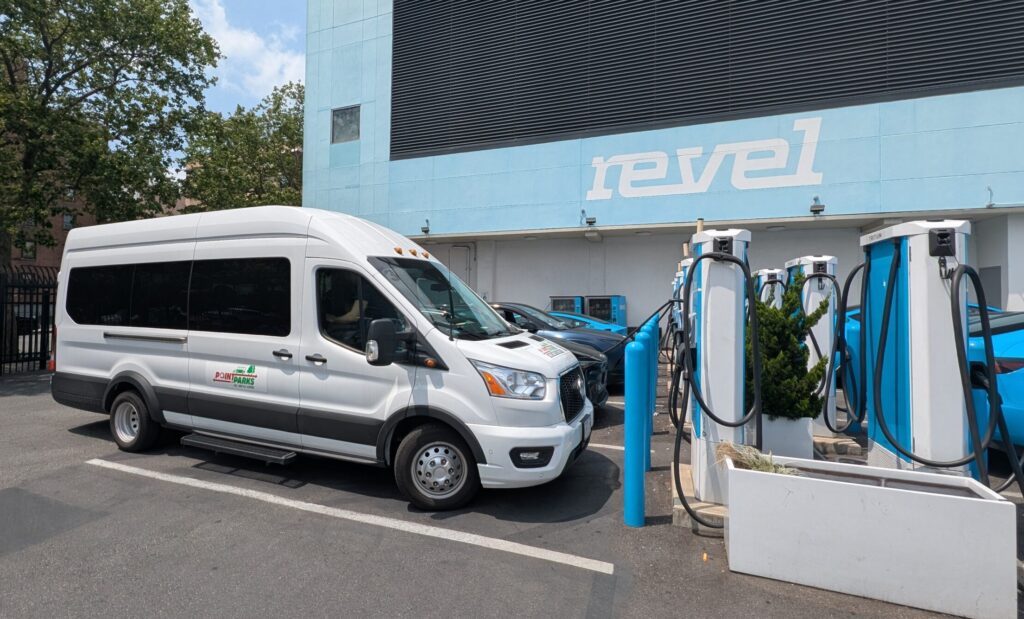
Think of it this way: L2 at your depot is where you fuel up every night. Fast charging on the network is where you top off when you need it during the day.
Depot Charging vs. Network Charging: You Need Both
Some operators ask:
“Can I just use public charging stations and skip the depot setup?”
You could. But it would be like running a gas fleet where your drivers have to find a gas station every morning before starting routes. It works in a pinch. It doesn’t work as a daily strategy.
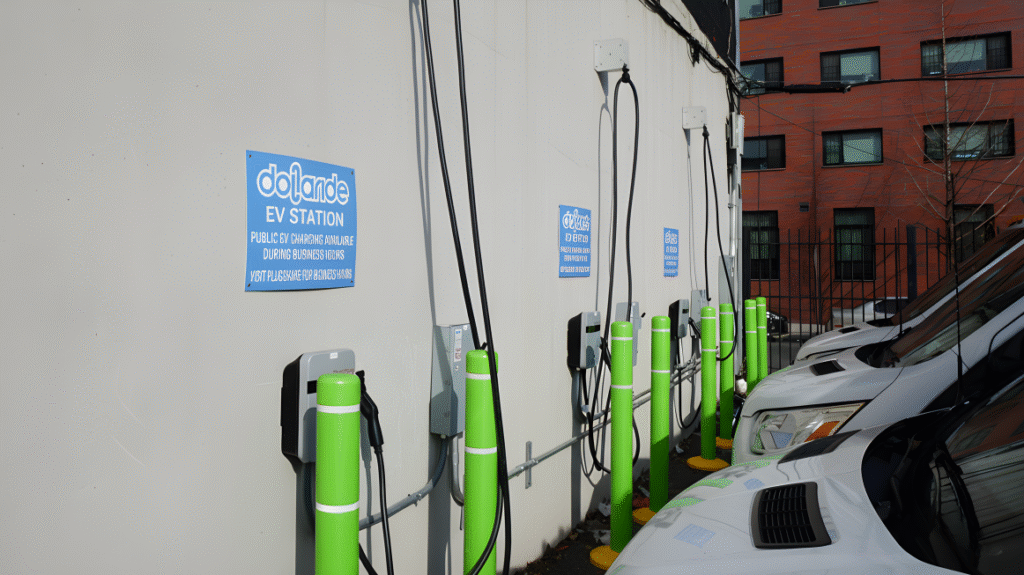
Depot charging (your base) is where you get predictable, low-cost overnight charging. It’s the foundation.
Network charging (public or partner stations) is your flexibility layer. It covers Day 1 operations before your depot is ready. It covers route extensions. It covers the days when a van comes back with less charge than planned.
You need both. One gives you cost control. The other gives you operational flexibility.
The Three-Legged Stool: Why Charging Alone Isn't Enough
Here’s what we tell every operator who starts asking about chargers: charging is one leg of a three-legged stool.
- Vehicle — you need the right EV for your operations
- Charging — you need reliable, affordable power
- Parking — you need a place to park and charge overnight
Remove any one of those legs and the stool falls over. An EV without reliable charging is a paperweight. A charger without a parking location is useless. A parking spot without a vehicle is just a parking spot.
The operators who succeed with electrification are the ones who solve all three at once — not the ones who buy a van first and figure out charging later.
How It Works on Day 1 (And Day 365)
The biggest concern we hear:
“I can’t wait six months for chargers to be installed before I start operating.”
You don’t have to. Here’s the actual timeline:
Day 1: You charge through our partner network. Stations are operational across NYC right now. Your drivers get access immediately. You start running electric routes while your permanent charging setup is being built.
Months 1–12: We handle the depot charging installation — site study, utility coordination, permitting, equipment, everything. L2 chargers go in at your base so you can shift to low-cost overnight charging as your primary strategy.
2027 and beyond: Access to dedicated Level 3 fast-charging sites built specifically for fleet operators like you.
You don’t wait for infrastructure to catch up. You start operating on Day 1 and the infrastructure builds around you.
Why You Don't Need to Become an Energy Expert
Here’s the part that matters most.
Installing commercial charging infrastructure means navigating site studies, electrical engineering, Con Edison applications, permitting, construction, and ongoing maintenance. It means understanding demand charges, load management, and utility rate structures.
You run a fleet. You move passengers. That’s your expertise — and it should stay your expertise.
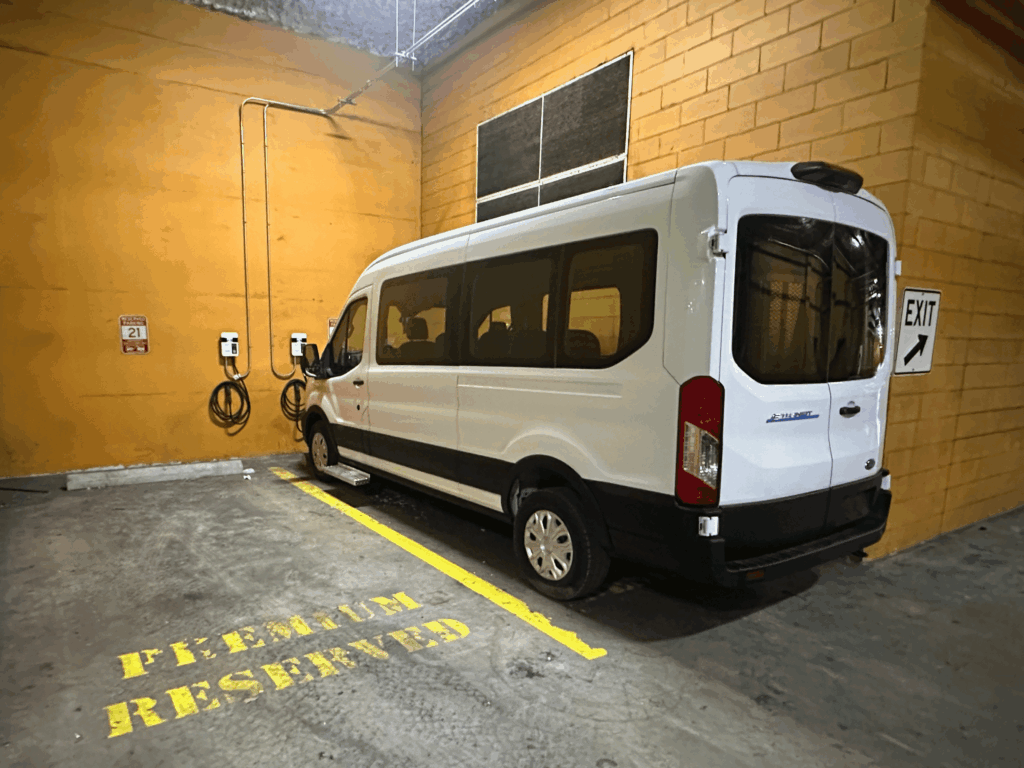
We bundle charging into our EVaaS model — Electric Vehicles as a Service — so the charging question has a default answer: we handle it. Network access on Day 1. Depot infrastructure over time. You don’t call Con Edison. You don’t hire an electrical engineer. You don’t manage construction timelines.
You focus on your routes, your drivers, and your passengers. We build the charging infrastructure underneath.
That $16,000 in annual fuel savings per vehicle? It already accounts for electricity costs. The math works. The logistics work. And you don’t have to figure out the logistics yourself.
Get a Charging Plan Built for Your Fleet
Every fleet is different. Your routes, your depot, your parking situation, your timeline — it all shapes the charging plan. The fastest way to get clarity is a 15-minute conversation about your operation.
Questions? Email us at team@dollaride.com — we read every one.
Dollaride is a Brooklyn-based clean-mobility company and certified Minority Business Enterprise (MBE). We provide turnkey EV-as-a-Service for small commercial fleets across NYC — vehicles, charging, financing, and parking bundled into one predictable monthly cost.
Prepared by Dollaride with Claude.