If you run a small fleet and you’ve ever asked a bank to help you finance a new vehicle — electric or not — you’ve probably heard some version of the same answer: not yet.
Not enough history. Not enough paperwork. Not the kind of business we know how to underwrite.
This is the story of a deal that got a different answer — and why it started not in a boardroom, but on a street in East New York.
"We trust where we're headed, and we know that we can get there together."
— Su Sanni, co-founder & CEO, Dollaride
▶️ Watch the announcement:
From back office to board room
Long before Dollaride was a fleet-electrification company, our co-founder and CEO Su Sanni was a kid in East New York, Brooklyn, walking over a mile to the nearest subway just to get to school.
His uncles — Nigerian immigrants — were among the early pioneers of New York’s dollar-van industry. They built their businesses from the ground up, moving neighbors along routes the city’s transit map ignored.
"I thought it was really fascinating that my uncles always had lots of dollar bills on them."
— Su Sanni
Su learned the business the way family businesses get learned: from the back office and from the passenger seat, riding along on the routes.
"That really shaped my mind on what it means to build a small business that also serves your community. It made me really look up to them, and other people like them."
— Su Sanni
That’s the seed of everything Dollaride does. The company started as a digital platform for dollar vans and grew into a B2B fleet-electrification company — winning $10 million from NYSERDA through the Clean Transit Access Program (CTAP) to electrify vans across Brooklyn, Queens, and the Bronx. But the why never changed: help the local transportation entrepreneurs who keep this city moving.
Why lenders hesitate — and it's not what you think
Here’s what most fleet owners never get to see: what the financing conversation looks like from the other side of the table.
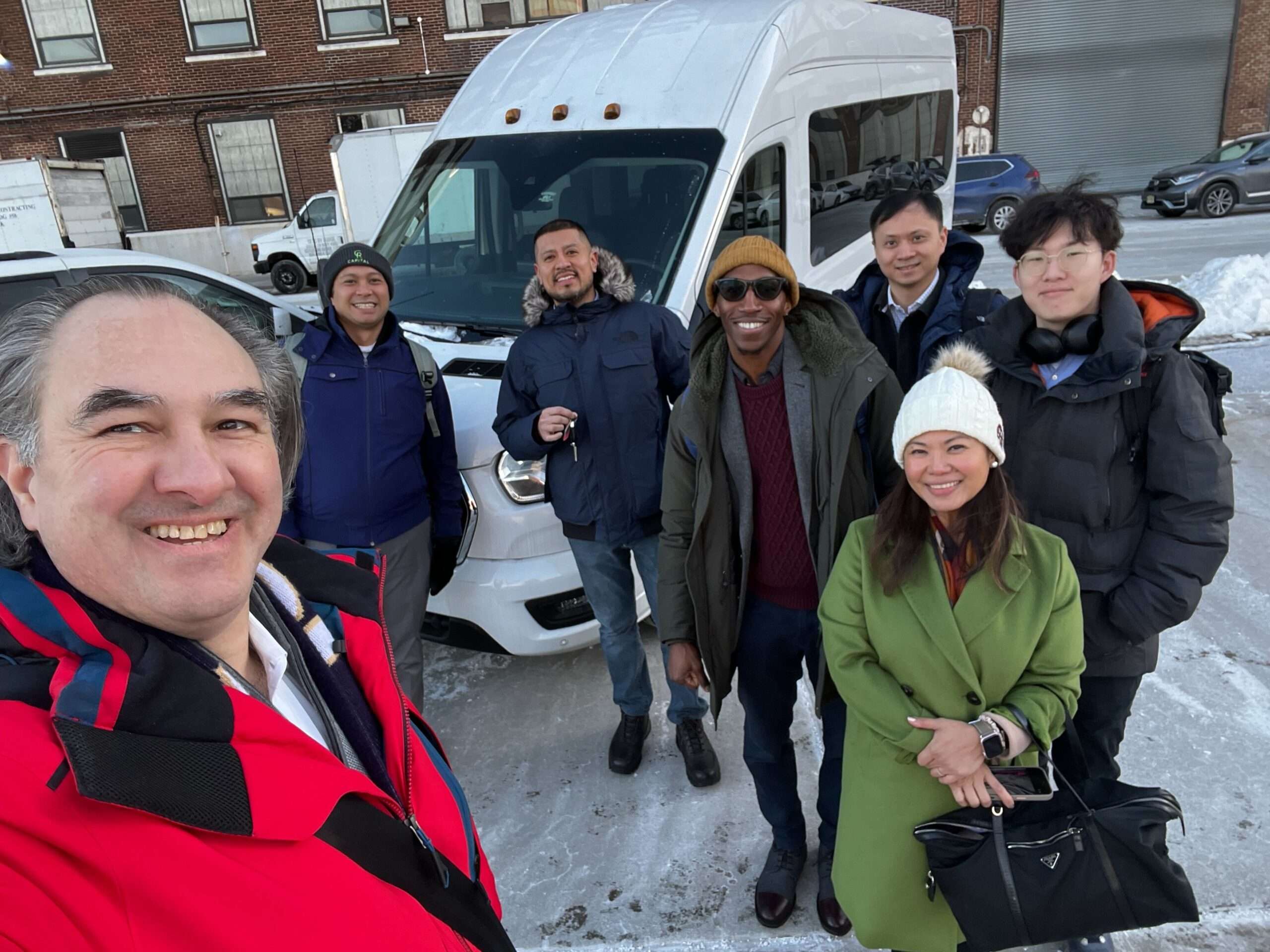
We recorded one. Su sat down with the two partners behind our latest electric-vehicle deployment — Zeti, the fleet-data platform, and Chestnut Run Capital Partners, the capital provider — and they talked openly about why lenders say not yet, and what finally changed their minds.
It isn’t that your business is bad. It’s that lenders can’t see it.
Jon Stafford, Zeti’s Chief Commercial Officer, has spent two decades in fleet management. The pattern he describes: lenders carry a “perceived risk” around electric vehicles because the technology is newer here — they don’t know the resale values, and they can’t tell whether an asset is out there earning or sitting in a lot. And as Su explains, small transportation businesses often don’t have the thick underwriting file — audited statements, CFO-built projections — that traditional lenders are set up to evaluate. The business can be solid and the answer still comes back not yet.
▶️ Watch the full conversation (34 min):
What changed: your operating data becomes your credit story
The unlock in this deal wasn’t a better pitch. It was visibility.
Every vehicle in the deployment reports real operating data — miles driven, utilization, asset value, even emissions avoided — onto a platform all three partners can see at the same time. A lender doesn’t have to guess whether the vehicles are earning.
"These assets are out there. They're not sitting somewhere — they're turning miles, they're generating revenue. What we can do to help mitigate that perceived risk is get better rates for the operators, to make their businesses pencil out."
— Jon Stafford, Zeti
That last part is the line that matters for you: perceived risk is priced into every loan a small fleet is offered. Shrink the risk, shrink the price. Run your vehicles hard and run them well, and that operating record — not a stack of paperwork — becomes the strongest part of your credit story.
Why this partnership, and not just this deal
"What really attracted us were the non-quantifiable things — impact above and beyond the financials."
— Yeng Felipe Butler, founding partner & CEO, Chestnut Run Capital Partners
For Yeng, it was personal before it was a transaction. She built Chestnut Run on the thesis that lower-middle-market companies doing meaningful work — across energy transition, healthcare, education — are still underserved by traditional capital. Dollaride fit, and it fit for a reason that predates any deal memo.
"When I heard what Dollaride was doing, I knew personally the gap that needed to be filled."
— Yeng Felipe Butler
And for Jon, who spent a career on the other side of the transportation business, this is a chance to point hard-won expertise at a problem that can finally be solved.
"I've put hundreds of thousands of internal-combustion cars on the road. My mission now is to help get those cars off the road and make a more sustainable future."
— Jon Stafford
"There are so many problems in the world that I don't know how to solve. But this is one that seems like there's really tangible answers."
— Jon Stafford
This is a blueprint, not a one-off
Ask Su where this goes, and he doesn’t describe a single deal. He describes a ladder.
"I look at this like rungs on a ladder — to building up the type of platform that can electrify thousands of these vehicles all around New York City, and potentially other cities as well."
— Su Sanni
Each deal that returns capital and electrifies a fleet makes the next one easier to finance. That’s the whole game: prove the model, widen the door, and bring more small operators through it.
This is a blueprint, not a one-off
- A “no” from a traditional lender isn’t a verdict on your business. It usually means the lender couldn’t see enough. The gap is visibility, not viability.
- Utilization is everything. A vehicle that’s moving is an asset; a vehicle that’s parked is a liability — to you and to how a lender prices you. It’s the same math we’ve talked about when it comes to keeping vehicles earning.
- You don’t have to build this capital stack alone. Blending state programs with private capital — the way this deal stacked NYSERDA-backed execution with Chestnut Run’s financing — is exactly the model we run so individual operators don’t have to negotiate it themselves.
Where Dollaride fits
This is the machinery behind the programs we bring to fleet owners. Through CTAP — the $10M NYSERDA-backed Clean Transit Access Program — qualified NYC fleets get into electric vehicles without the large upfront capital that usually kills the conversation, with charging and support included. The financing partnership in this story is how that keeps scaling.
If you operate a fleet in NYC and want to know whether you qualify, start here: dollaride.com/ctap — or book a call with our team and we’ll walk your routes and numbers with you.
Prepared by Dollaride with Claude.