You’re hiring harder this year than you did last year.
If you run a small fleet in NYC, you already know this. The CDL pool is shrinking. Drivers turn over faster than they used to. Routes sit because there’s nobody to put behind the wheel. You can buy the van. You can finance the charger. The hardest part of running a fleet right now isn’t the equipment — it’s the people.
And here’s the thing nobody’s quite saying out loud: it’s about to get harder.
The Driver Problem You Already Know
Commercial driving has been a tight labor market for over a decade. CDL-licensed drivers — with the right class and passenger endorsements for your vehicle — have always been hard to find. The pipeline narrowed during COVID and never fully recovered.
For small fleet operators, the problem shows up as:
- Job postings sitting open for weeks. What used to fill in days now takes a month or more.
- Higher pay demands. Retention requires more than it did three years ago.
- More turnover among new hires. New drivers leave for marginally better offers across town.
- Backfill time hurting routes. Every empty seat is a lost trip, lost contract reliability, and a potential lost client.
This isn’t unique to NYC. It’s not unique to commuter vans. It’s the structural backdrop of every fleet operator’s hiring conversation in 2026.
But there’s a layer to this that EV-bound fleets are just starting to notice.
The New Wrinkle: EV Training
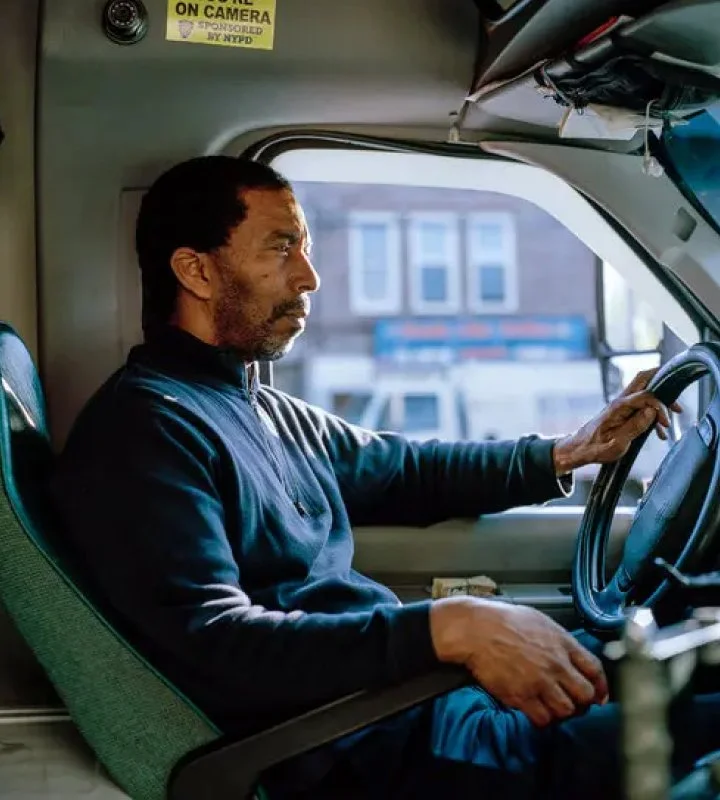
When your fleet starts to electrify — through CTAP or otherwise — your drivers don’t need a new license. The CDL stays the same. But the way drivers operate the vehicle does change, and the operations behind it change more.
Practical examples:
- Range and charging awareness. EV drivers need to think about state-of-charge the way diesel drivers don’t think about fuel level until the gauge dips. Bad habits cost you trips.
- Charging behavior at depot. Plugging in correctly. Understanding fast vs. slow charge windows. Recognizing a fault before it becomes a service ticket.
- Regenerative braking and operating efficiency. EVs reward smooth driving. They punish aggressive driving with range loss. Drivers can adapt — but they need to be shown.
- Safety around high-voltage systems. This isn’t just a vehicle change. It’s a workplace-safety category that didn’t exist in your shop before.
None of this is rocket science. But it requires real training, and the training has to come from somewhere.
Right now, most operators don’t have a clear answer to “where does my driver get certified for EV operations?” Because the institutional layer that produces that training doesn’t exist at scale yet. Manufacturer training is one option. Vendor walkthroughs cover some of it. NYSERDA’s workforce-development track within CTAP is starting to fund this. But there’s no widely-recognized credential a driver can put on a resume that says “I’m EV-ready.”
For now, you’re going to have to build that capability inside your own operation. And so is every other operator.
The Mechanic Problem Coming Next
If hiring drivers is the visible problem, hiring mechanics is the slower-burning one — and it shows up the moment your first EV needs service.
Most fleet shops in NYC are diesel-trained. The diagnostic skills, tools, and certifications that produce a competent commercial-vehicle mechanic don’t directly transfer to EV powertrains. ASE — the legacy certification standard — exists, but doesn’t yet reflect EV-first practice. EVITP, which covers EVSE installation, is “a plus” in the charging-infrastructure trades but isn’t a fleet-mechanic credential.
What we hear from EV repair shops in the region:
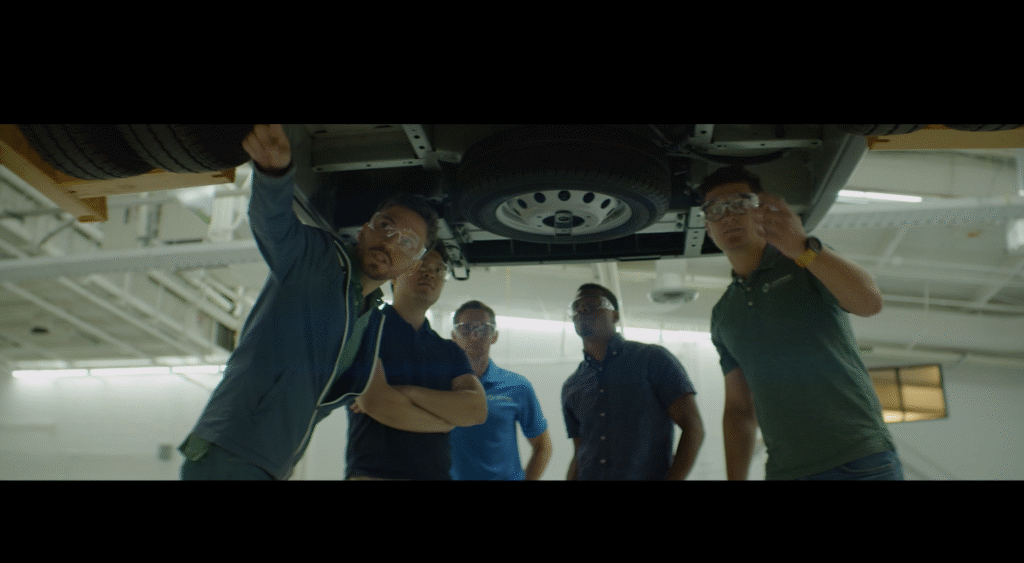
- High-skill diagnostic technicians — the techs who can troubleshoot an EV powertrain without a vendor on the phone — can take up to a year to fill a single role.
- The most common EV repair pathway is manufacturer training — slow, vendor-locked, often expensive.
- There is no centralized “EV academy” producing job-ready mechanics at scale. Multiple repair operators are independently proposing one. Nobody has built it yet.
For a fleet operator, this shows up in two specific ways:
- In-house service capacity. If you maintain your own vehicles, your shop will need to upskill. That takes time and money you weren’t planning for.
- Third-party repair availability. If you outsource service, the repair-shop bottleneck becomes a part-availability and turnaround-time problem. EVs out of service longer than diesel vehicles is a real risk if you don’t plan for it.
Either way, the mechanic capacity that supports an electrified fleet is constrained — and it’s not going to fix itself in a year or two.
What This Means for Your Fleet Plan
If you’re considering electrifying — or you’re already in CTAP — workforce planning has to be part of the project, not an afterthought.
Practical things to do now:
- Map your current driver pipeline. Where do your drivers come from today? Local CDL schools? Word of mouth? Specific staffing agencies? Strengthen the relationships you already have. They’re harder to rebuild than to maintain.
- Budget for EV operator training. Don’t assume the manufacturer walkthrough is enough. Plan for ongoing operator-side training as part of your fleet’s first 90 days, and refresh it annually.
- Plan for service capacity early. Whether you’re upskilling your own shop or contracting service, identify your EV-capable repair partner before the first vehicle arrives. Lead times will only grow.
- Watch the pay band. As more fleets electrify, drivers and techs with EV experience will become a small, premium segment of the labor market. Plan to be competitive.
- Document your training. Whatever you build internally — toolbox talks, depot walkthroughs, operator handbooks — write it down. It becomes the seed of the certification pathway you’ll formalize later, and it’s a hiring asset for new drivers right away.
None of this is a reason to delay electrification. It’s a reason to plan it as a workforce project as well as a vehicle project.
What Dollaride Is Doing About It
Through CTAP — and a parallel workforce-development track funded under the same NYSERDA initiative — Dollaride is working to connect fleet operators with training partners that produce job-ready candidates: drivers, mechanics, and EVSE-side roles. The goal isn’t to be a training provider ourselves. It’s to make sure the workforce capacity you need shows up at the same speed the vehicles do.
We’re early on this. The training landscape is fragmented and the funding is just starting to flow. But it’s a real focus, because none of the rest of the EV transition works without it.
If you run a small fleet (5 to 50 commercial vehicles) in the NYC metro and the hiring side of your business is shaping your electrification timeline, we’d like to know what you’re seeing. The more signal we get from operators on the ground, the better the workforce programs we help shape will be.
See If CTAP Is Right for Your Fleet →
Questions first? Schedule a call with our fleet team →
Prepared by Dollaride with Claude.
Dollaride is a Brooklyn-based clean-mobility company and certified Minority Business Enterprise (MBE). We administer CTAP on behalf of NYSERDA and provide turnkey EV-as-a-Service for small commercial fleets across NYC — vehicles, charging, and financing bundled into one predictable monthly cost.